Mar 23, 2018
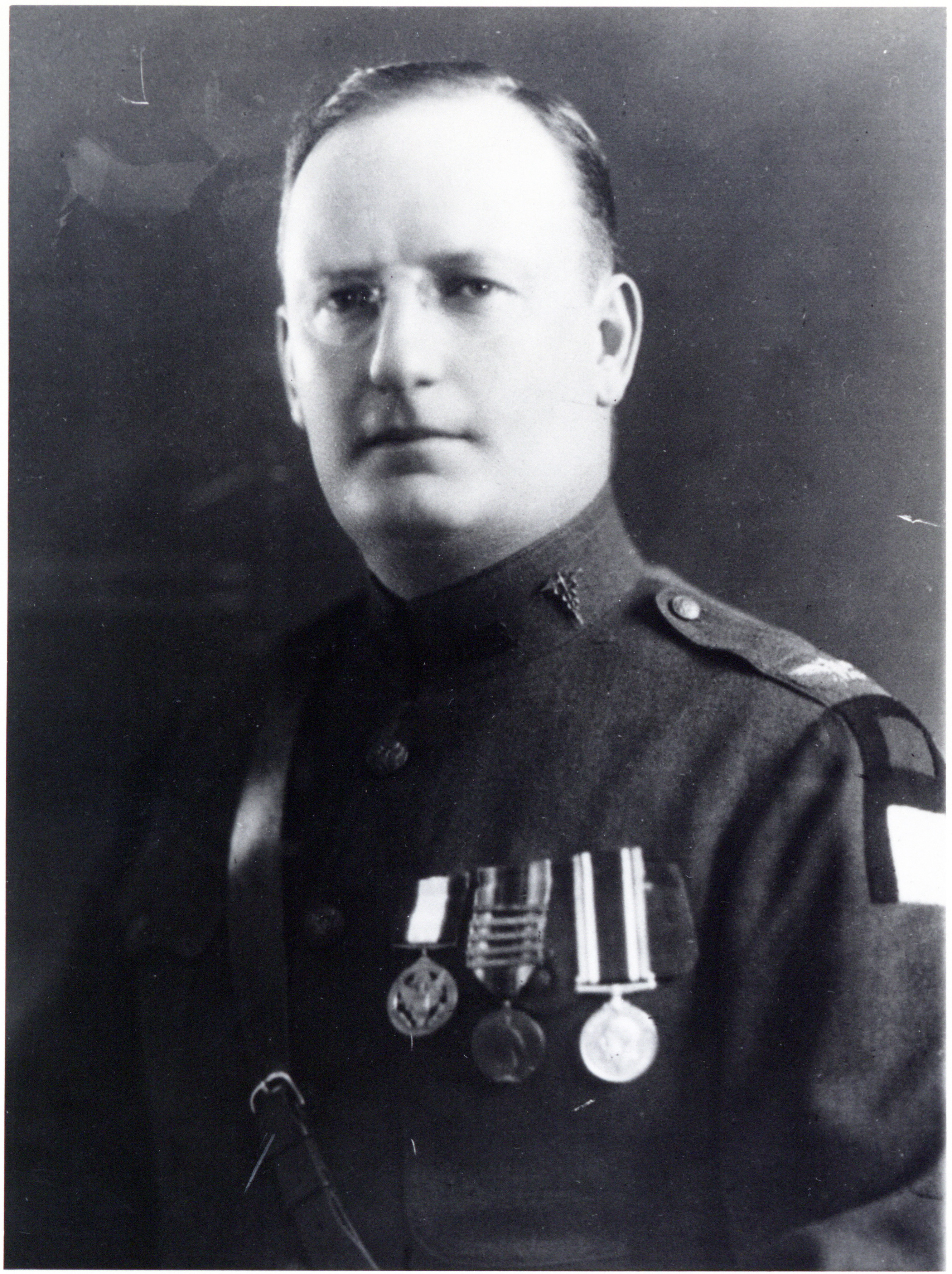
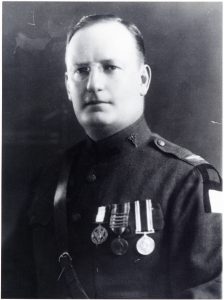 A new finding aid for The Col. Henry H. M. Lyle Collection of World War I Photographs and Documents, 1916-1943, was recently published and made available to researchers on-line (http://icahn.mssm.edu/about/ait/archives/collection/henry-lyle). The collection includes 200 photographs from World War I, maps and documents used during the war, some correspondence, and reprints of articles by Lyle.
The heart of the collection is the photographs taken in France during World War I, which depict often dramatic or surprising images of the war. There are views of hospital stations, barracks, and outdoor equipment (some include large defensive weapons), transportation of wounded soldiers, field dressing stations, supply trains, and troops on the battlefields. Interior views document soldiers, patients, operating rooms and special treatment rooms. A number of the images display the effects of mustard gas and other brutal wounds sustained by soldiers, while others capture the unit compound against the French countryside in an oddly artistic fashion. Still others provide a view of everyday life in the compound – washing clothes, unloading shipments of supplies and such, but which brings to life the challenges of a large group of people living in one spot at that point in time. Laundry meant picking lice off of clothes; unloading supplies meant huge piles of boxes; transporting wounded soldiers sometimes meant walking through ankle-deep mud. The collection also captures images of foreign soldiers in national uniforms, some riding horseback, a lifestyle that is very different from the standard U.S. soldier’s, which adds an interesting, and occasionally humorous, side to the war.
Henry Hamilton Moore Lyle, MD, was a noted surgeon and decorated soldier. He was born in Northern Ireland in 1874. His family immigrated to Ontario, Canada when Lyle was a boy. He graduated Cornell in 1896, and went on to Columbia University’s College of Physicians and Surgeons, graduating in 1900. He took an internship at St. Mary’s Hospital for Children and at New York Hospital and a year’s surgical internship at St. Luke’s Hospital (1901-1902) before joining St. Luke’s surgical staff in 1904 and where he remained on staff until his death.
It appears that Lyle spent the year between his internship and surgical appointment traveling abroad, visiting clinics in Great Britain, France and the German-speaking countries. This familiarity with Europe may have led to his voluntary enlistment in World War I two years before the U.S. was formally involved in the conflict. In 1915 he took leave from his private practice and hospital positions in New York and spent six months as Chief Medical Officer of American Ambulance Hospital B, Juilly, France.
In 1916 he again took a leave and returned to France to serve for several months as Chief Surgeon of Ambulance d’Annel (Longueil, France). In April 1917 when the US entered the conflict, he joined the U.S. Army Reserve and in May was ordered to active service. In June he organized the United States Army Evacuation Hospital No. 2 at Camp Benjamin Harrison, and was appointed its commander when it left for France in January 1918.
In September 1918, Lyle was made Director of Ambulances and Evacuation of the Wounded for the First Army. During the ensuing Meuse-Argonne offensive, over 125,000 sick and wounded were brought to the railhead hospitals under his supervision. In recognition of his outstanding service, particularly during the Meuse-Argonne offensive, where the Evacuation Hospital No. 2 played a major role as one of two front line hospitals established in the Zone of Combat, he was decorated with the Distinguished Service Medal (U.S.). Lyle was also awarded the British War Medal and the British Victory Medal.
When the war ended Lyle returned to New York and medical practice at St. Luke’s Hospital, where his reputation as an outstanding surgeon followed his successes in battle. Lyle retired from medical practice in 1938, though remained a Consulting Surgeon at St. Luke’s until his death from coronary thrombosis on March 11, 1947.
Feb 21, 2018
Soon the Match will be upon the fourth year class and after months of deciding on a field, debating on various institutions, filling out paperwork and then smiling bravely through interviews, the new doctors will be on the resident staff of a hospital. This complex system of ‘matchmaking’ began in 1952 and replaced the practice of individuals applying to various residency programs, perhaps being measured against changeable and very subjective criteria.
In the early years of the 20th century, The Mount Sinai Hospital had in place a rigorous testing program to help winnow the number of applicants, leaving the ‘best and the brightest’ to face additional testing. Each year several hundred medical students would sit for the examinations that would lead to the selection of the twelve newest members of the house staff. The first day’s written examination was number coded, with the individuals’ names hidden so favoritism could not occur. The next day, the top scores were posted, and the 60 highest scorers would return for oral exams given by the medical staff. The questions were broad and usually designed to show a wide knowledge in the basic sciences and clinical medicine, as well as critical thinking skills. Questions on art or literature were not unknown, depending on the faculty member’s interests. The exam evolved over time to be more rigorous, and eventually recommendations from medical schools deans were also sought.
In 1930, these were some of the written questions the applicants were posed. How would you do?
1. In what stages of the following diseases would you terminate early pregnancy? a. Tuberculosis of the lungs b. Nephritisc. Diabetes d. Valvular heart disease
2. Under what conditions would you select for anesthesia? a. Chloroform b. Ether c. Nitrous oxide d. Spinal e. Local f. What special contra-indication for each?
3. In what illnesses may the joints be involved?
4. In what extra abdominal conditions may abdominal symptoms appear?
5. A patient has been operated upon for an acute gangrenous appendicitis with abscess. He had one chill prior to operation. Post-operative course is marked by fever of 102 to 104; high leucocytosis; polynucleosis. X-ray examination of the chest and right hypochondrium shows moderate elevation of right diaphragm. Discuss possible causes of the high temperature.
Jan 16, 2018
This year marks the 50th anniversary of the opening of the Icahn School of Medicine at Mount Sinai. Classes began on September 9th, and on October 20, 1968 there was a day-long celebration to dedicate the School and inaugurate Dean George James, MD as the first President of The Mount Sinai Medical Center. As part of this special day, there was a colloquium in the morning with four Nobel Prize laureates speaking about the future of medicine. (The papers presented by the speakers were later published in the Mount Sinai Journal of Medicine. They are available here.) In the afternoon there was the dedication of the School and the inauguration of Dr. James. In the evening there was a banquet held at the Grand Ballroom at the Hotel Commodore.
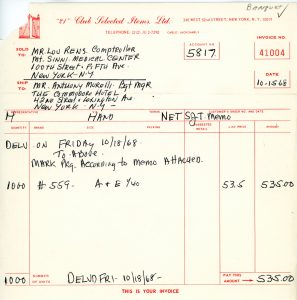
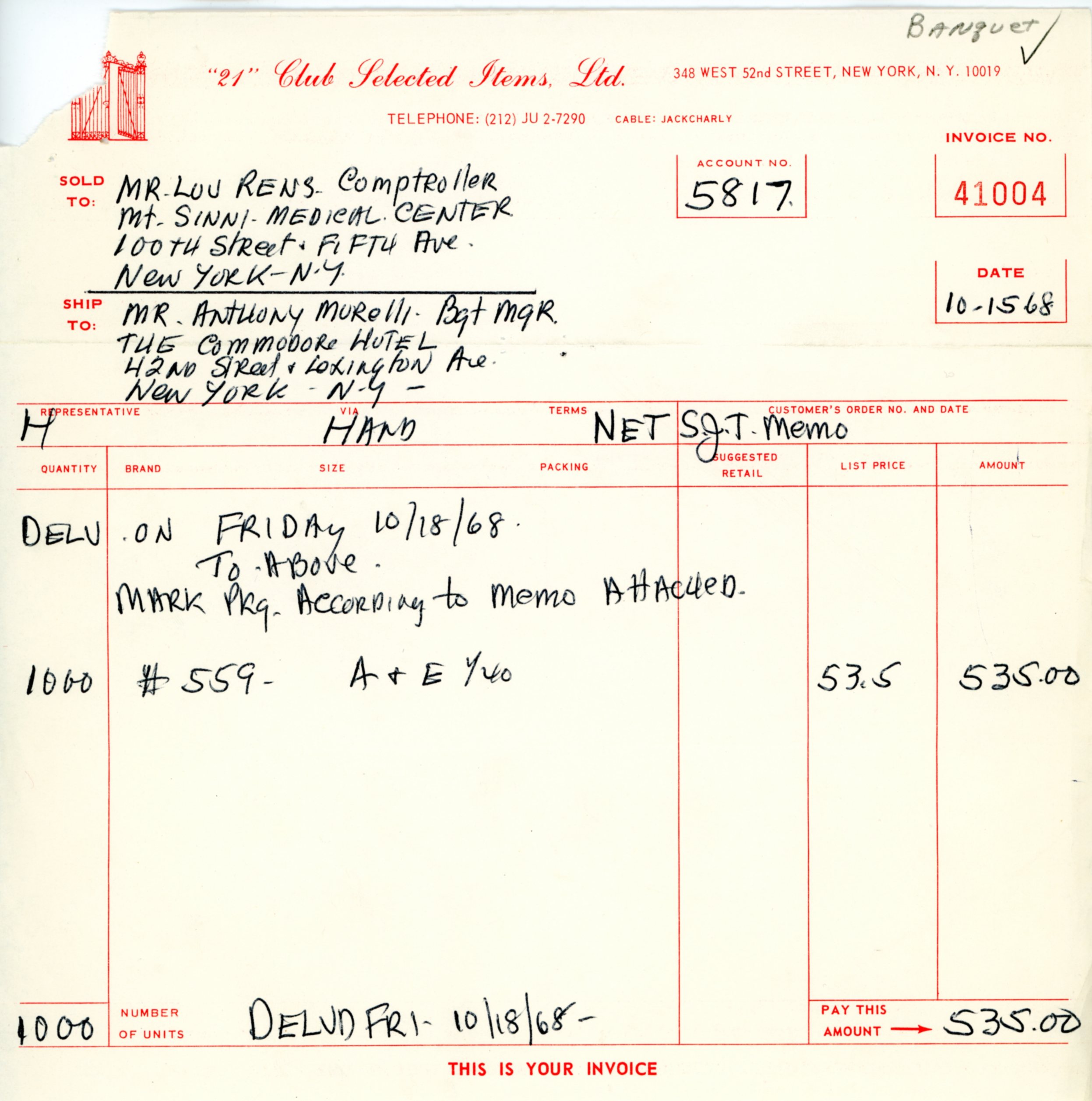
Cigar order for the Dedication Day banquet
The Aufses Archives has several files about the planning and creation of this big event and how it all came together over a few short months. No detail was too small for the organizers to organize, as evidenced by an invoice for 1,000 cigars to be sent to the hotel from the 21 Club (founded by the brother of Mount Sinai Trustee I. Robert Kriendler). Today we would be shocked if a hospital passed out tobacco products but the 1960s were a different time. Still, already the tide was turning. In March of 1968, the Trustees’ Executive Committee had voted 8 to 5 to ban the sale of cigarettes at Mount Sinai, but it was not until 1989 that areas of the Hospital started to be designated as smoke free. This was the result of action by the Student Council of the School, with the support of the Dean’s Office, and then working with the Hospital administration and the Medical Board. What was seen by some at the time as difficult to implement is now viewed as a simple idea whose ‘time had come.’
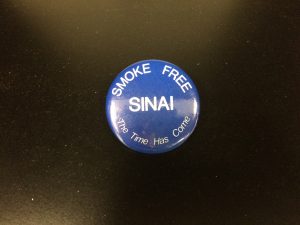
A button created by Mount Sinai students to encourage the institution to go smoke free, 1989
Dec 8, 2017
In October of this year, The Mount Sinai Hospital announced the opening of the new cardiac unit, the former Cardiac Care Unit (CCU), now located on KCC 6 in the Klingenstein Clinical Center. There are 20 beds, ten of which are the Cardiac Intensive Care Unit (CICU) and ten are step-down beds, the Cardiac Step Down Unit (CSDU). Unlike the other ICU units, the ten ICU beds are all private rooms. The entire unit is beautiful, with a receptionist desk as you get off the elevator.
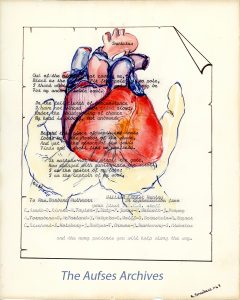
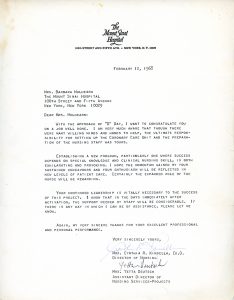
It just so happens that last year, the Aufses Archives received a small set of papers from Barbara McPeek Mulhearn, RN, Class of 1962 of The Mount Sinai Hospital School of Nursing. Among those items was information about Mulhearn’s role in creating the first Cardiac Care ICU at the Hospital, which opened in 1968. Her title was Assistant Nursing Supervisor in charge of the Ames Coronary ICU, an eight bed unit on the 4th floor of KCC. The Unit opened February 19, 1968.
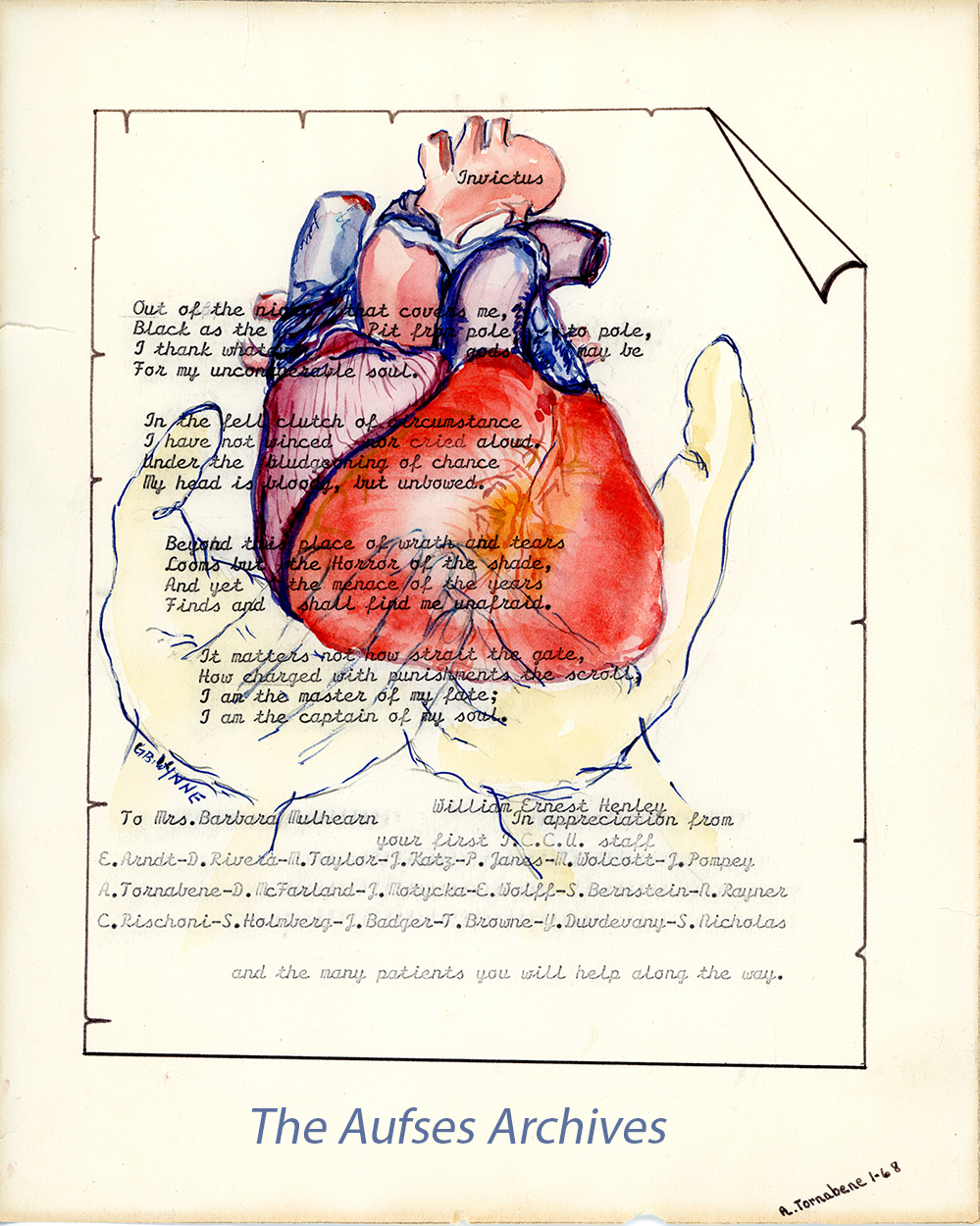
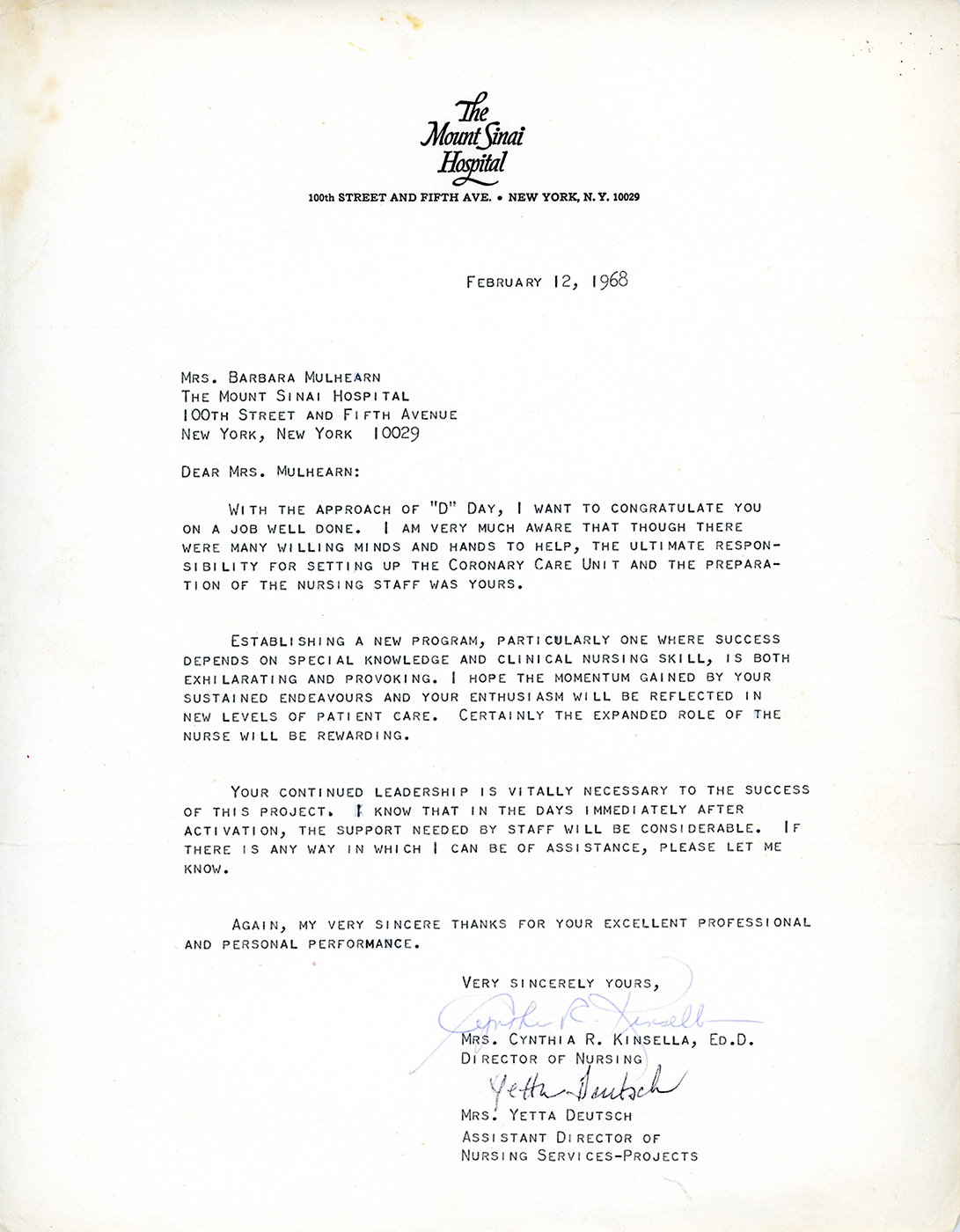
Shown below are two pieces from the collection: a drawing of a heart held in a person’s hands with the poem “Invictus” by William Ernest Henley typed over it. This was sent to Mulhearn from “her first I.C.C.U. staff,” in appreciation from them “and the many patients you will help along the way.” Also shown here is a letter from Dr. Cynthia Kinsella, the Director of Nursing at The Mount Sinai Hospital at the time, thanking Mulhearn for her efforts and encouraging her as they neared the Unit opening.
Fifty years on, the caring legacy continues.
Sep 29, 2017
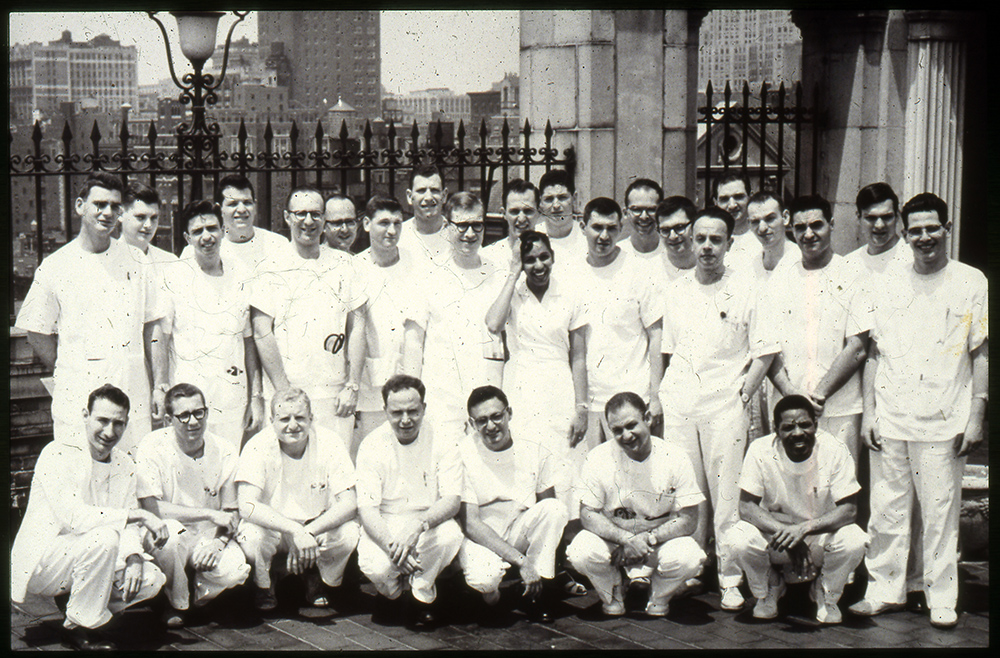
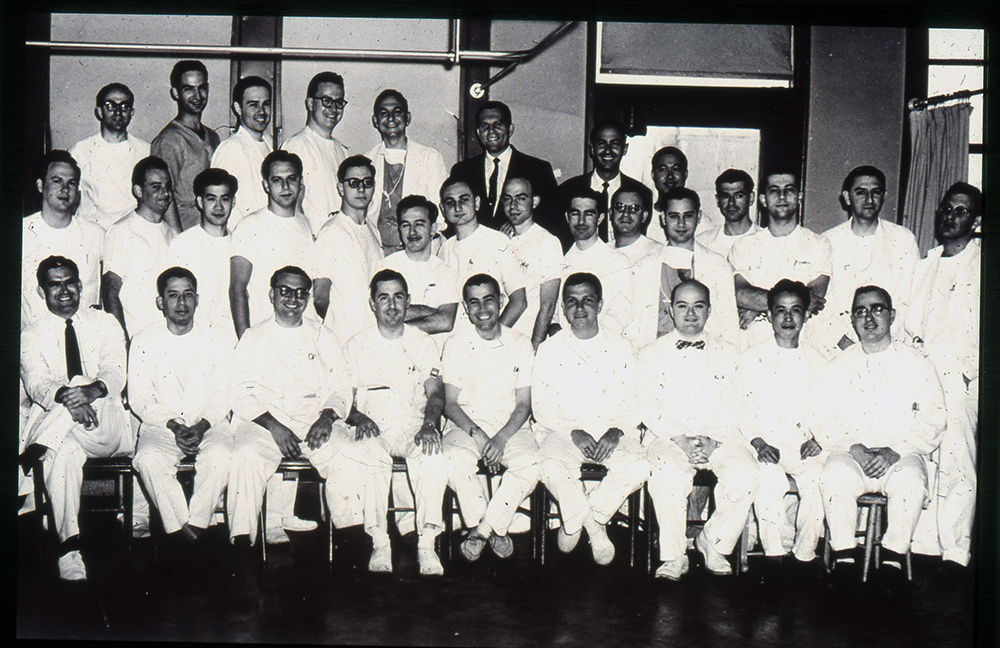
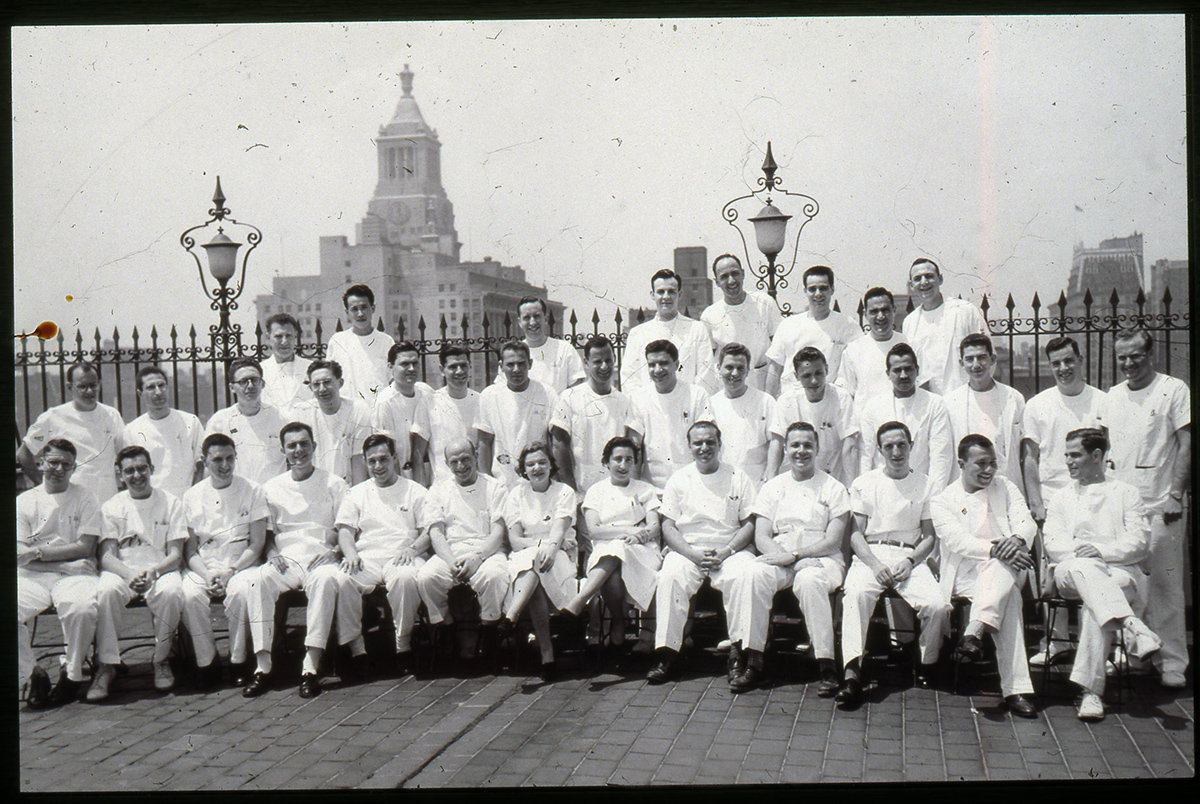
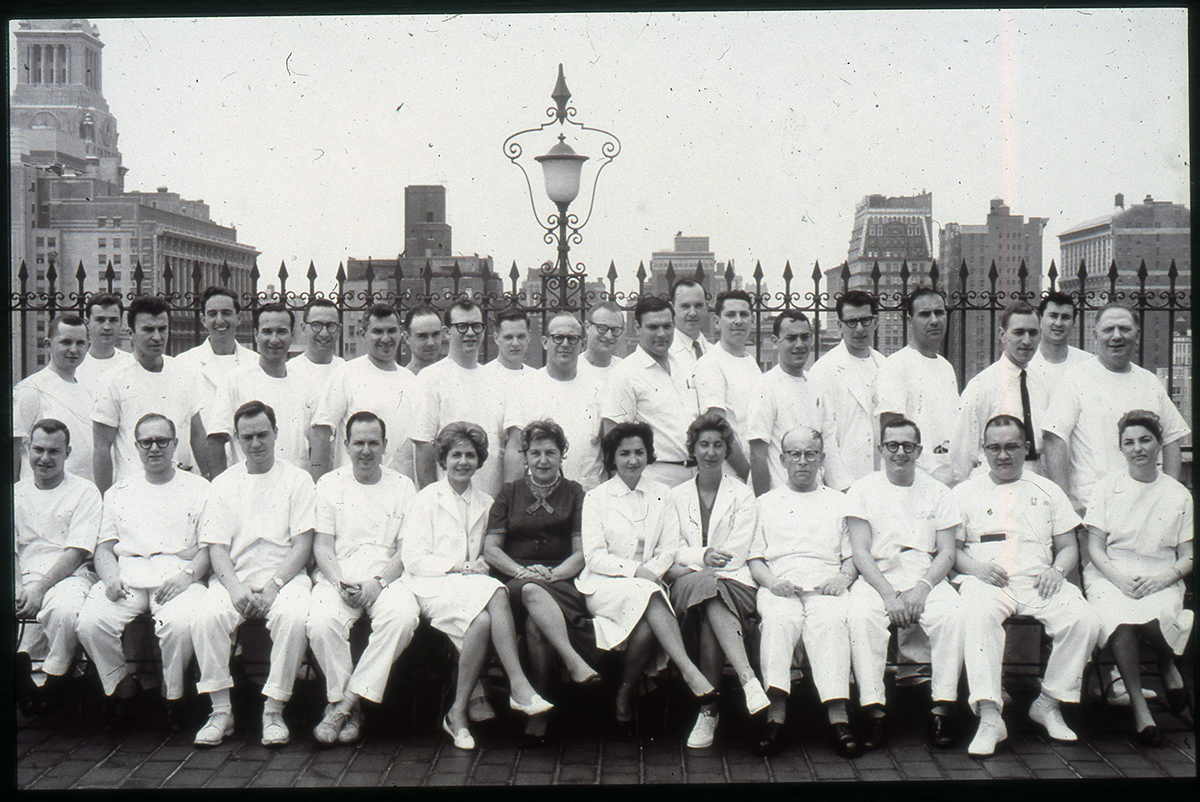
As the repository for the historical records of the seven Mount Sinai Health System hospitals, the Arthur H. Aufses, Jr. MD Archives has an extensive collection of historical photographs, many of which are available to view in our Image Database. Sometimes, however, the photographs in our collection have no information that would give them context. These photographs of the Beth Israel Medical Center house staff in the 1950s and 1960s arrived at the Archives as part of an unorganized collection of slides that we have been hard at work arranging and cataloging. While we can tell that they are photographs of the house staff, and can recognize that most of them were taken on the roof of the Dazian Pavilion, we don’t know the names of any of the doctors. Do you? If so, contact the Archives and let us know!
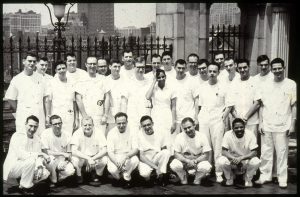 The 1958 Beth Israel house staff on the roof of the Dazian Pavilion
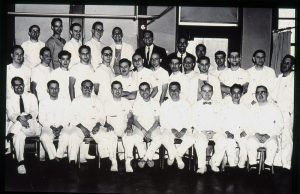 The Beth Israel house staff of an unidentified year (early 1960s?) on a hospital ward
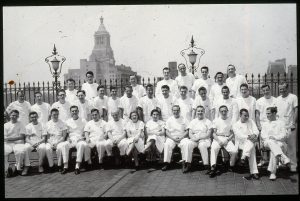 The Beth Israel house staff of an unidentified year (late 1950s?) on the roof of the Dazian Pavilion
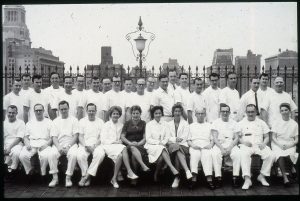 The Beth Israel house staff of an unidentified year (early 1960s?) and other Beth Israel doctors/administrators on the roof of the Dazian Pavilion
Jun 8, 2017
The Arthur H. Aufses, Jr. MD Archives recently received a copy of the 1957 Mount Sinai Nursing Department Manual of Nursing Procedures from Gail Singer Lyon, member of the Class of 1962 of The Mount Sinai Hospital School of Nursing. Manuals like these have value because they show what the patient experience and medical care were like then, and they provide a sense of what the duties of a nurse were at a given point of time. The Archives has many such manuals from 1931 up to the present day, and they provide great information on how nursing, medicine, and hospitals have changed over this span.
While the Archives has other copies of this edition of the Manual, what makes this copy special are the extras that Ms. Lyon has included with her volume, from inserts to doodles. The manuals were given to the students to govern their practice when they were in the clinical areas of the Hospital. It includes detailed instructions on everything from Abdominal Binders to Wall Suction, Method of Using. Throughout the Manual, when it is necessary to provide examples using the names of doctors, the procedures referred to them as Dr. Roe and Dr. Moe. The patient is, of course, John or Jane Doe. Ms. Lyon wrote hints and additional information on the pages of her volume, and also inserted forms and updates to the policies.
This post highlights some of those ‘extras’ that make this volume interesting.
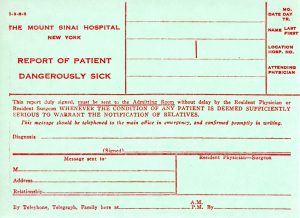
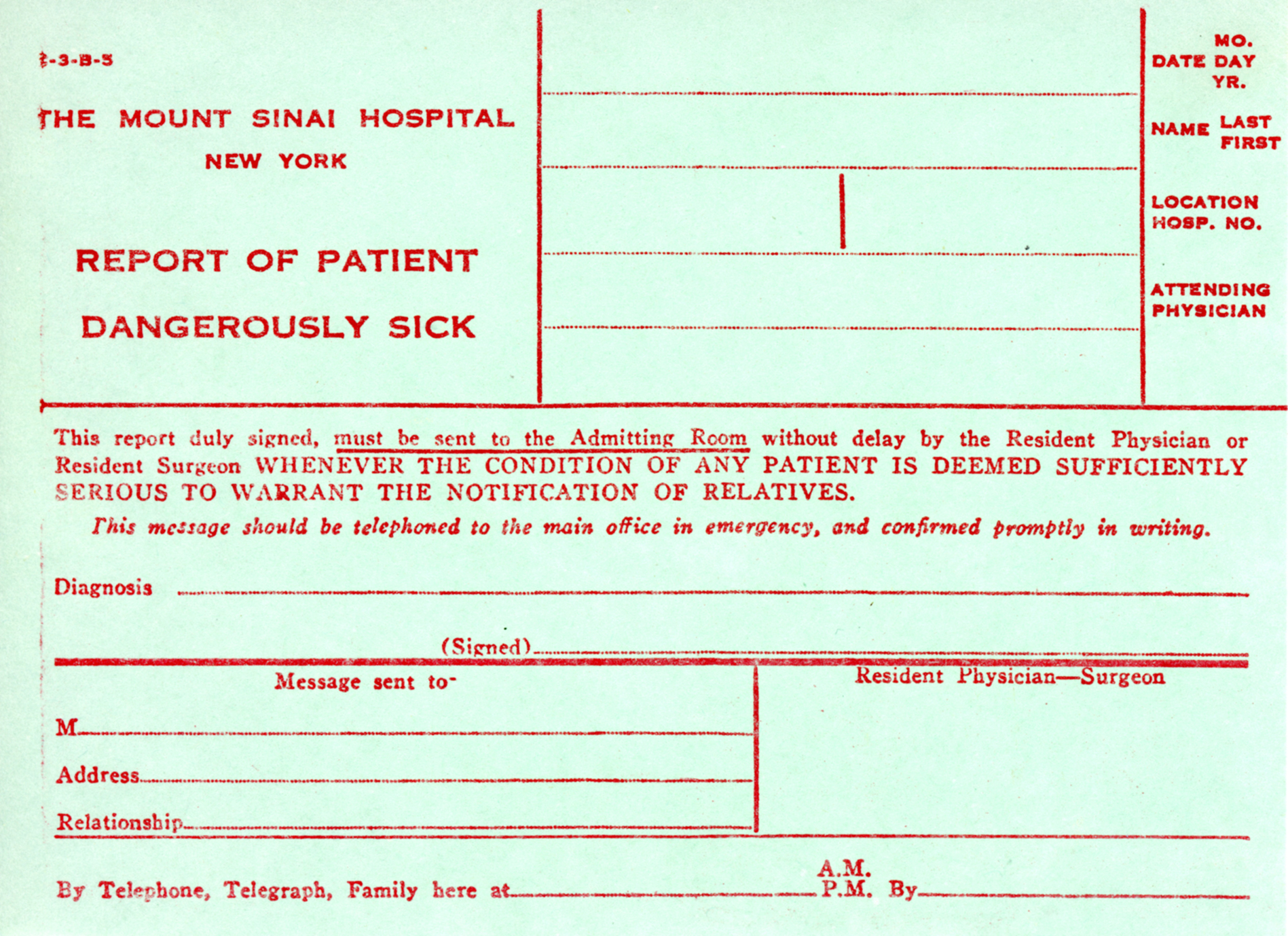
This form shows the communications technology of the time. Note the bottom row for how a family would be reached in time of emergency.
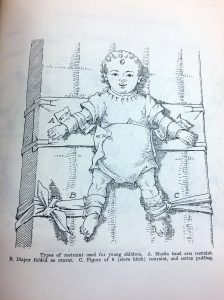
A lovely drawing showing how to restrain a child
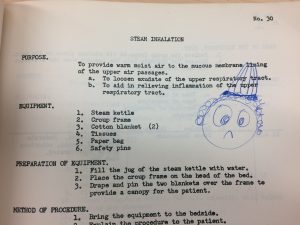
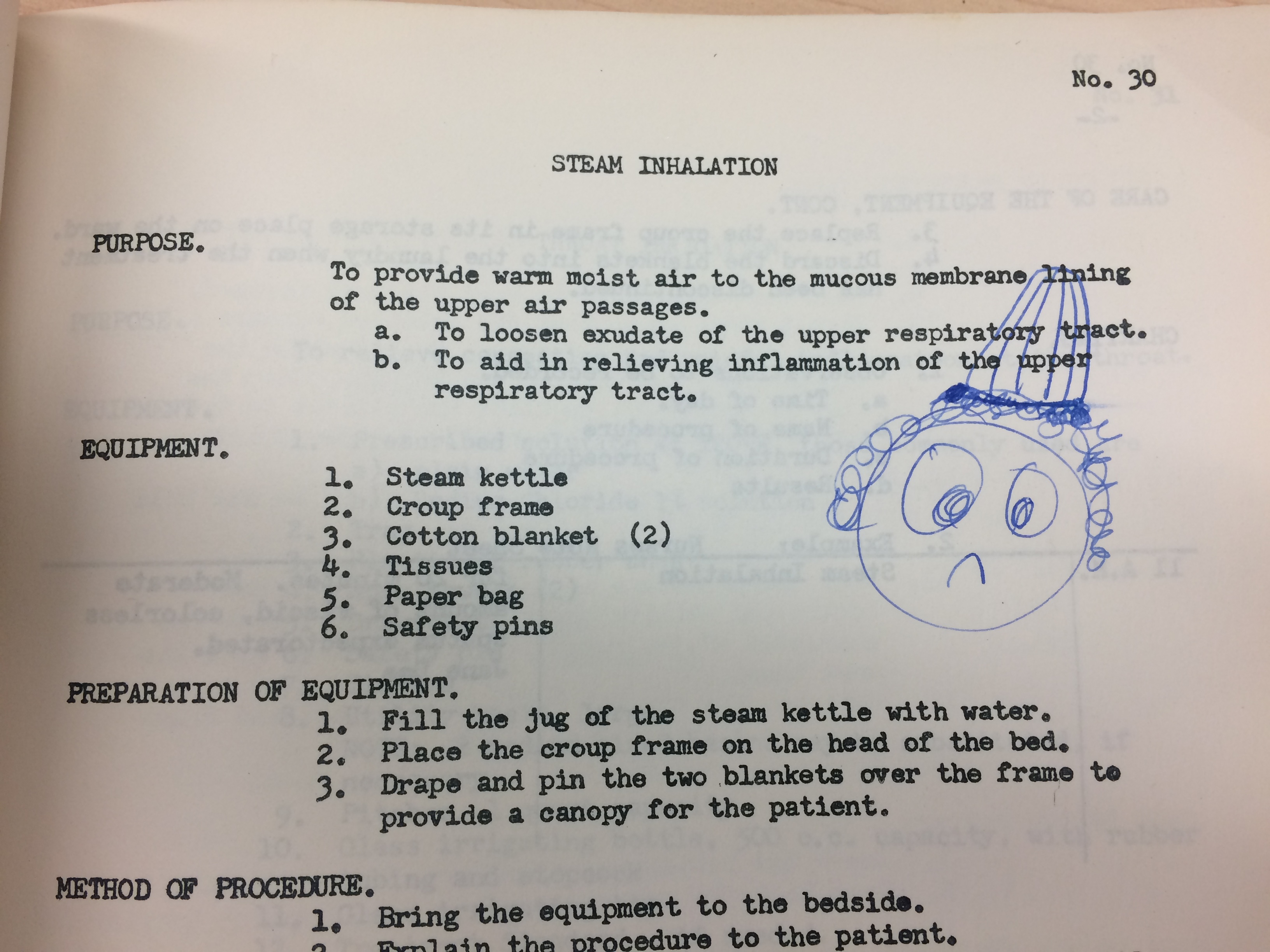
A doodle, clearly showing a woman wearing a Mount Sinai Hospital School of Nursing cap, with is many pleats in the front.

 A new finding aid for The Col. Henry H. M. Lyle Collection of World War I Photographs and Documents, 1916-1943, was recently published and made available to researchers on-line (http://icahn.mssm.edu/about/ait/archives/collection/henry-lyle). The collection includes 200 photographs from World War I, maps and documents used during the war, some correspondence, and reprints of articles by Lyle.